October 05, 2026

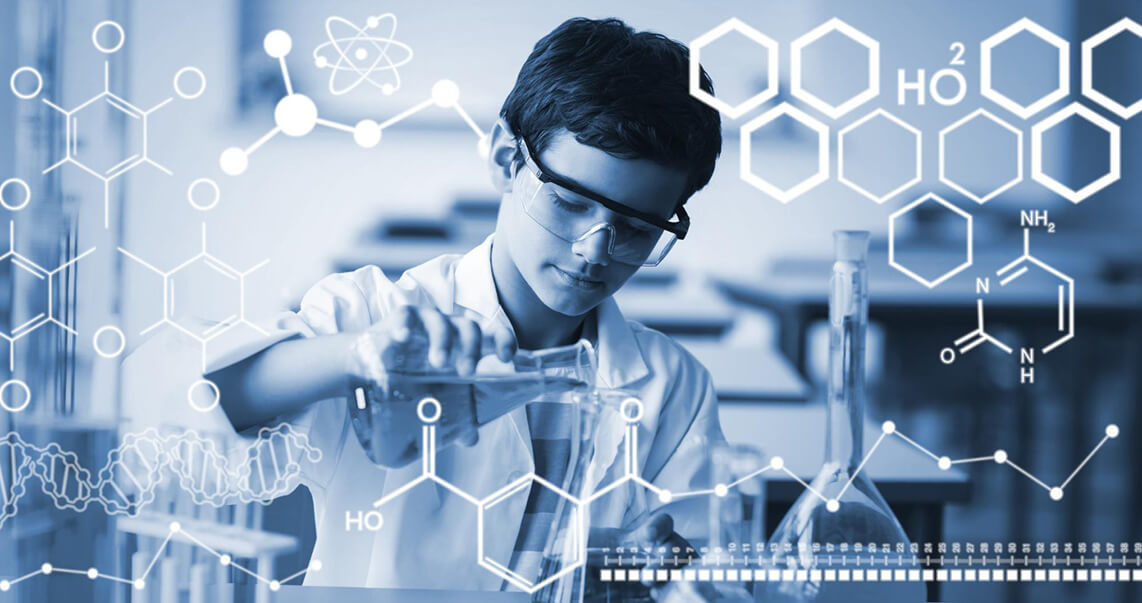
The Department of Applied Sciences at GTBIT is dedicated to delivering high-quality education in basic sciences and humanities to engineering students. This department is fundamental in shaping the critical thinking and analytical skills of students, which are essential for their engineering education and professional development.
Academic Programs
The department primarily supports the undergraduate engineering programs by offering courses in:
Mathematics: Fundamental courses in Calculus, Linear Algebra, Differential Equations, and Advanced Engineering Mathematics.
Physics: Courses covering Thermodynamics, Electromagnetism, Quantum Mechanics, Special theory of Relativity, Optics, Statistical Physics, Crystal Structure and Band theory of Solids.
Chemistry: Engineering Chemistry, including Organic, Inorganic, and Physical Chemistry.
Humanities and Social Sciences: Courses in Communication Skills, Human Values and Professional Ethics, Indian Constitution, Economics for Engineers, Entrepreneurship principles, Management principles, and Indian Knowledge System.
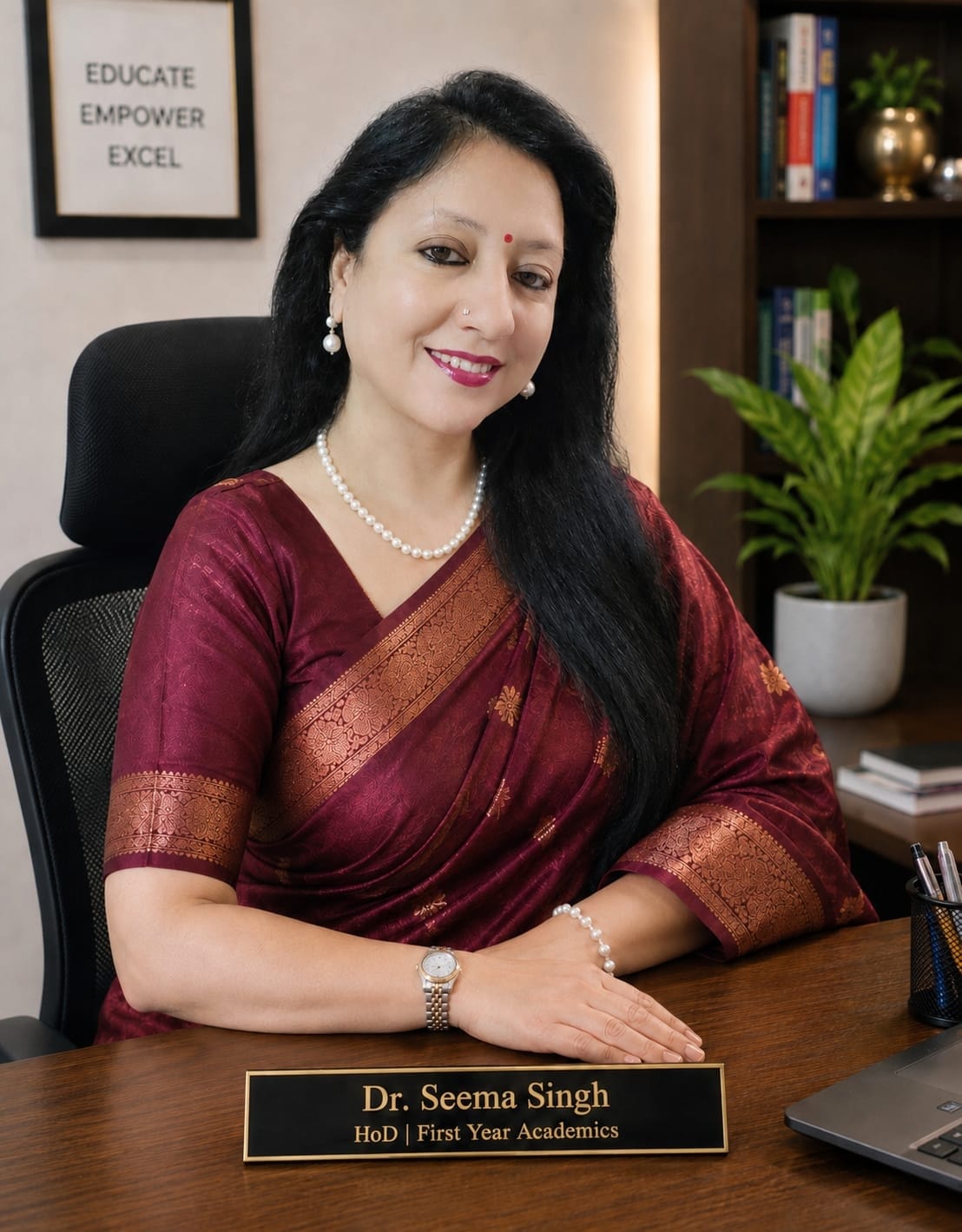
Dr. Seema Singh
(HOD - First Year Academics)
Mobile : +91-9971392590
Email : seemasingh@gtbit.ac.in
Experience. Expertise. Academic Leadership
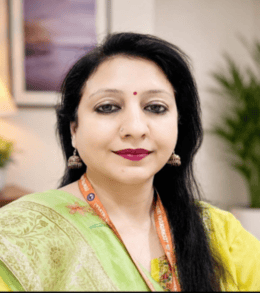
Dr. Seema Singh is an Associate Professor of English with 23 years of experience

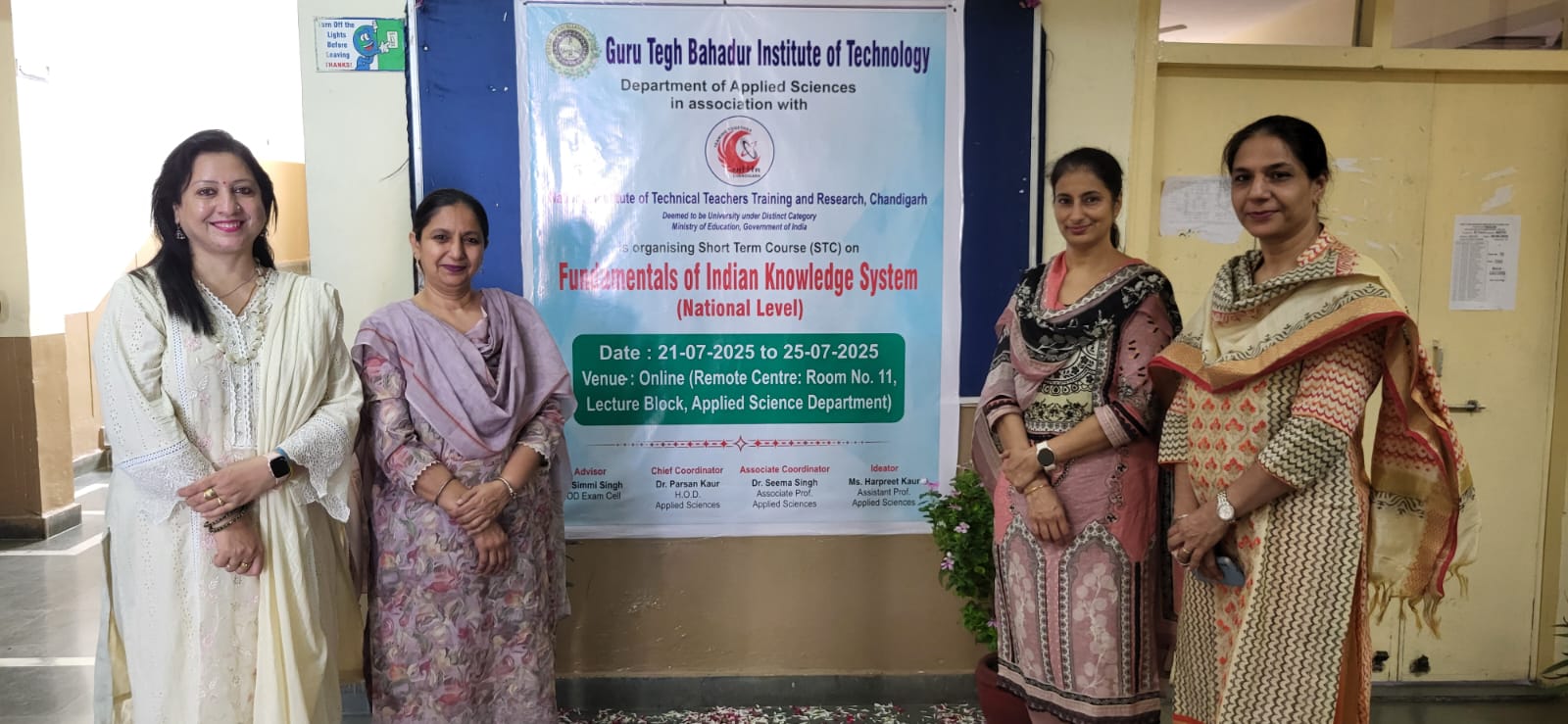
Prof. Simmi Singh is a Professor of Physics with extensive experience in teaching, academic administration, examination management and institutional academic governance.
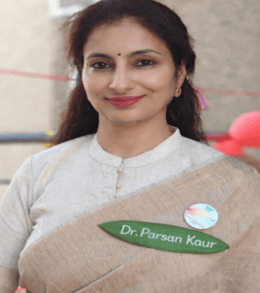
Dr. Parsan Kaur is an Associate Professor of Mathematics and former Head of the Department of Applied Sciences, bringing extensive academic experience in teaching, academic leadership and foundational engineering education....
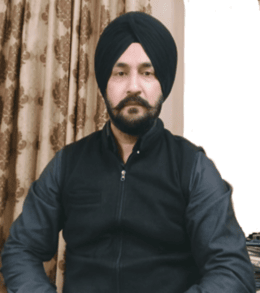
Dr. Sunmeet Singh brings to the academic discourse a rich and valuable perspective from the field of Mechanical Engineering, grounded in strong engineering fundamentals, practical insight, design thinking and application-oriented learning....
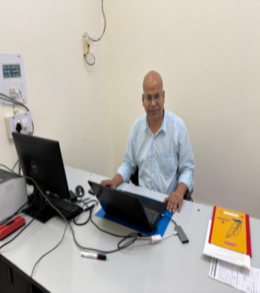
Dr. Pankaj Sharma is an interdisciplinary academic, researcher and AI/ML educator...
Dr. Seema Singh is an Associate Professor of English with 23 years of experience in higher education, encompassing academic leadership, teaching, research, mentoring, student development and institutional academic initiatives. Her academic interests span English language education, communication and soft skills, innovative pedagogy, technology-enabled learning, professional communication and contemporary approaches to higher education.
Her scholarly work reflects a sustained engagement with English Literature, language pedagogy, narrative studies and the evolving relationship between technology, communication and the humanities. Her principal area of literary research is Bakhtinian theory, with particular focus on dialogism, heteroglossia, polyphony, chronotope and novelisation. A significant body of her research examines the fiction of Amitav Ghosh, exploring questions of identity, history, migration, multiculturalism, colonial discourse and narrative plurality. Her recent scholarship extends these theoretical concerns into emerging areas such as digital humanities and AI-humanities interfaces, including questions of AI, othering, human identity and the changing relationship between humans and machines. This combination of literary scholarship and pedagogical research informs her approach to teaching, mentoring and curriculum development. She has presented research papers at national and international conferences and actively contributes to academic discourse through her research, publications, scholarly presentations and academic engagements.
As Head of First-Year Academics, Dr. Singh plays a significant role in shaping the academic transition of students entering engineering education. She views the first year as a formative stage for developing strong academic foundations, communication skills, confidence, discipline, critical thinking, creativity and a positive learning mindset.
She heads the GTBIT Finishing School, where she leads and coordinates a range of activities, workshops and training programmes focused on enhancing students’ communication skills, professional competencies, employability and overall personality development.
She is the Convenor of D’Lang Chaps (DLC), the institute’s literary and managerial society, through which she spearheads a wide range of student-centric activities, competitions, workshops and events that foster creativity, communication, leadership and managerial skills.
She has also been serving as the Convenor of the annual student magazine, NOOR, for several years, providing sustained leadership to the institute’s literary and creative initiatives. In addition, she is a member of several important institutional committees, contributing actively to the academic, co-curricular and administrative functioning of the college.
Her approach emphasises a balanced integration of foundational knowledge, communication, collaboration, creativity, experiential learning and student mentoring. She advocates an empathetic yet purposeful academic environment where students feel supported while being encouraged to think independently and take ownership of their learning.
Through academic leadership and faculty coordination, she works towards building a strong foundation for students’ professional journey. Her educational philosophy is rooted in the belief that education should empower students not merely to succeed academically but to think critically, communicate effectively, adapt confidently and contribute meaningfully.
Prof. Simmi Singh is an Professor of Physics | HoD, Examination Cell. Prof. Simmi Singh is a Professor of Physics with extensive experience in teaching, academic administration, examination management and institutional academic governance. As the Head of the Examination Cell, she plays a vital role in ensuring the systematic, transparent and efficient conduct of examinations and assessment processes. Her academic and administrative responsibilities reflect a strong commitment to academic rigour, fairness, consistency and adherence to established institutional standards.
With her experience in Physics education, Prof. Singh brings a disciplined, analytical and methodical approach to academic processes. She contributes to curriculum implementation, assessment practices, faculty coordination and the smooth execution of examination-related activities. Her leadership supports the effective implementation of institutional academic policies while ensuring that assessment remains credible, structured and student-centric.
Her association with the First-Year Academics framework further strengthens the emphasis on systematic assessment, academic discipline and timely academic processes. Through her expertise, leadership and meticulous approach, she contributes significantly to creating an organised, transparent and academically robust learning environment for students.
Dr. Parsan Kaur is an is an Associate Professor of Mathematics and former Head of the Department of Applied Sciences , bringing extensive academic experience in teaching, academic leadership and foundational engineering education. Her association with the Department of Applied Sciences reflects her significant contribution to strengthening the scientific and mathematical foundations that underpin engineering learning.
With her expertise in Mathematics, Dr. Kaur emphasises conceptual clarity, logical reasoning, analytical thinking and the ability to approach complex problems through structured and systematic methods. Her academic leadership has contributed to fostering an environment that values rigorous learning, interdisciplinary understanding and the meaningful application of fundamental concepts.
As part of the First-Year Academics framework, her experience strengthens the focus on building strong academic foundations at the very beginning of students’ engineering journey. She encourages students to develop mathematical confidence, scientific curiosity and problem-solving abilities that can support their learning across specialised engineering disciplines. Her contribution reinforces the importance of strong fundamentals as the foundation for innovation, adaptability and sustained academic growth.
Dr. Sunmeet Singh is an Dr. Sunmeet Singh
Former HoD, Department of Mechanical Engineering.
Dr. Sunmeet Singh brings to the academic discourse a rich and valuable perspective from the field of Mechanical Engineering, grounded in strong engineering fundamentals, practical insight, design thinking and application-oriented learning. With extensive experience in teaching, academic administration and institutional leadership, he has contributed significantly to strengthening engineering education and nurturing technically sound and intellectually curious learners.
His academic approach emphasises the importance of connecting theoretical concepts with practical applications. He encourages students to look beyond textbook knowledge, understand the principles underlying engineering systems, and develop the ability to analyse, design, innovate and solve problems effectively. His perspective is particularly valuable in helping students appreciate the interconnectedness of engineering disciplines and the relevance of foundational concepts in addressing real-world challenges.
As a former Head of the Department of Mechanical Engineering, Dr. Singh brings valuable insights into curriculum implementation, academic planning, faculty coordination and student development. His experience encourages learners to cultivate critical thinking, precision, creativity and an application-oriented mindset.
His association with the First-Year Academics framework adds an important engineering perspective to students’ formative academic journey. He inspires students to view engineering not merely as a body of technical knowledge but as a dynamic discipline driven by innovation, design, application, sustainability and purposeful problem-solving.
Dr. Pankaj Sharma is an Former HoD, Department of CSE – Artificial Intelligence and Machine Learning.
Dr. Pankaj Sharma is an interdisciplinary academic, researcher and AI/ML educator with a Ph.D. in Statistics from IIT (ISM) Dhanbad and an M.E. in Mechanical Engineering from Delhi Technological University (DTU). His doctoral research involved the statistical analysis of weld joints of weldable magnesium alloy (AZ31B) using Metal Inert Gas (MIG) welding under the influence of an external magnetic field, reflecting his interdisciplinary foundation across statistics and engineering. With 12+ years of experience in higher education, his academic and professional journey has since expanded into machine learning, deep learning, artificial intelligence and Generative AI.
His areas of expertise include statistical modeling, machine learning, NLP, Generative AI, Large Language Models, Retrieval-Augmented Generation (RAG) and Agentic AI. He brings together strong analytical foundations and emerging technologies to create practical, technology-driven approaches to teaching, learning and problem-solving.
As an academic leader, educator and mentor, Dr. Sharma emphasizes strong fundamentals, computational thinking, analytical reasoning, innovation and hands-on learning. He has contributed to curriculum development and has mentored students in areas including Machine Learning, Reinforcement Learning, statistical modeling, predictive analytics and Generative AI.
Dr. Sharma has published six research papers in SCI/Scopus-indexed journals and has extensive experience in training students and working professionals in Data Science, Machine Learning and Generative AI. His current interests include AI-driven applications, intelligent systems, statistical and machine-learning methods and the application of emerging AI technologies to real-world problems.
As part of his commitment to experiential and industry-oriented learning, he has initiated and conducted intensive AI/ML training programmes for students at the institute during summer and winter breaks. These programmes provide students with hands-on exposure to Artificial Intelligence, Machine Learning, Deep Learning and emerging AI technologies, with an emphasis on practical implementation, projects, problem-solving and developing the skills needed to navigate and contribute to the rapidly evolving technology landscape.
Dr. Sharma believes that education should not be limited to learning existing technologies. His approach is to help students build strong foundations, think critically, experiment with emerging technologies and develop the confidence to apply their knowledge to meaningful real-world problems.